
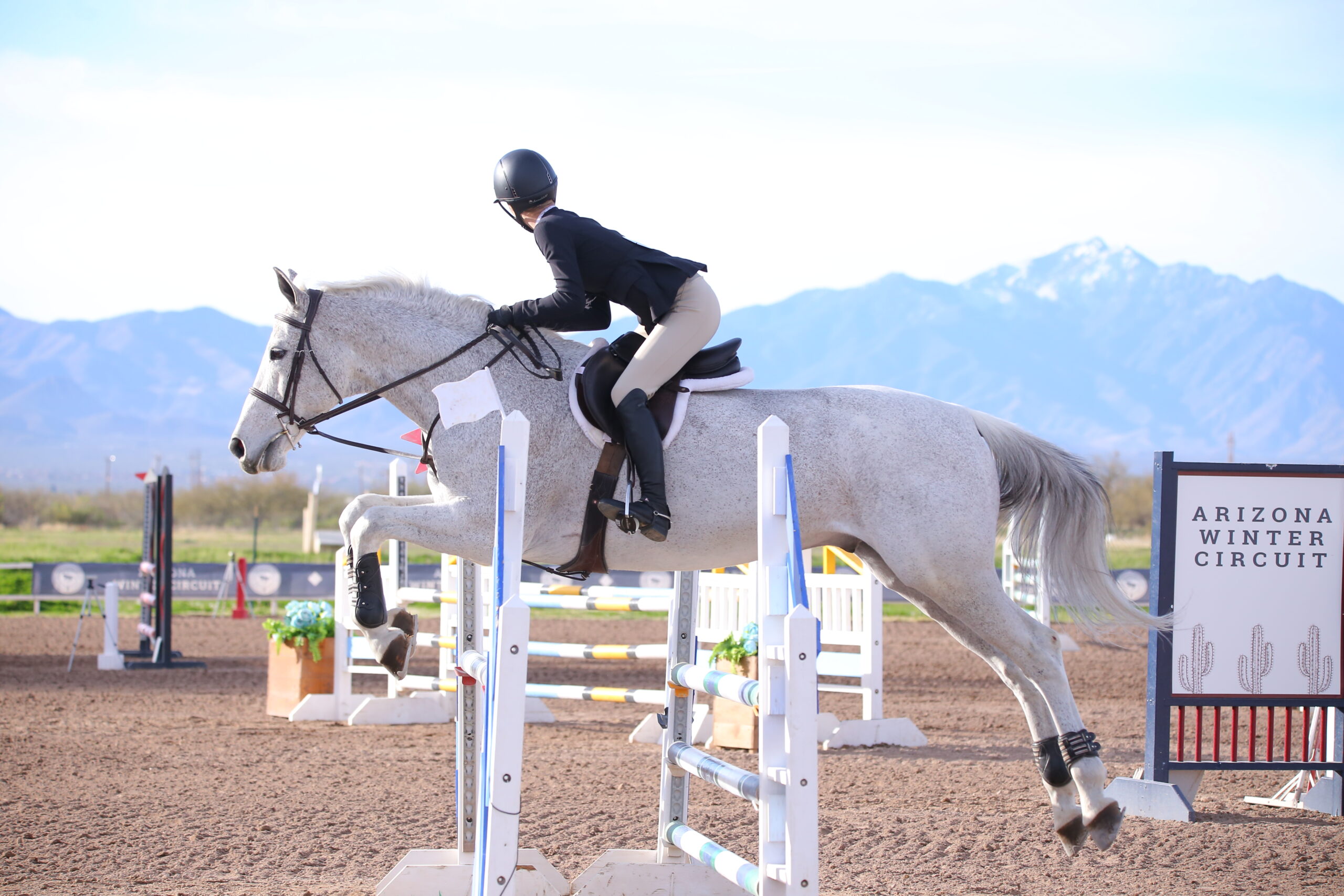
If you’ve been riding in the hunter/jumper world for any amount of time, you’ve probably heard the term “AA circuit” thrown around. Maybe you’ve watched riders compete at a HITS or Colorado Horse Park show and wondered what it would take to get there yourself. Or maybe someone told you that’s where you’re headed and you nodded along without entirely knowing what that means.
Let me break it down — honestly, with a realistic timeline and no vague reassurances.
What the AA Circuit Actually Is
In USEF-rated show competition, shows are rated on a scale: B, A, AA, and Premier. AA shows represent the second-highest level of competition and are where you’ll find the majority of serious amateur and junior competitors at the national level.
At an AA show, the prize money is higher, the competition is deeper, the courses are more technical, and the judges are more discerning. Classes are divided into hunters and jumpers, with hunters judged on style, pace, and way of going, while jumpers are judged purely on faults and time. Both require a well-schooled horse, a polished rider, and — this is the part people underestimate — a deep, functional partnership between the two.
As a USHJA Certified Trainer and an active Grand Prix and AA competitor myself, I’m not describing this from a distance. I compete at this level because I believe in staying sharp. It makes me a better trainer for the riders in my program.
The Honest Milestones
Getting to the AA circuit isn’t a switch you flip. It’s a progression of skills, experiences, and decisions. Here’s how I generally see it unfold for serious amateurs and juniors.
The first milestone is competitive confidence at local shows. Before worrying about AA, you should feel solid at schooling and B-level competitions. You’re not just surviving — you’re executing. Your lines are accurate, your pace is appropriate, and you can walk into the ring with a plan and carry it out.
The second milestone is equitation. Hunter seat equitation — whether you’re showing it or just training it — builds the position and feel that allows you to ride any course on any horse. I put a lot of emphasis on this foundation even for riders whose primary goal is the jumper ring.
The third milestone is horse selection. This is often where timelines get longer or shorter. The right horse for the AA level is experienced, consistent, and able to hold its form under pressure. Finding that horse, vetting it properly, and developing your partnership takes time. There are no shortcuts here.
Training Foundation Is Everything
Here is the thing I feel most strongly about: the quality of the training your child receives before and after getting a horse matters far more than the horse itself.
A well-trained rider on an average horse will go further than an undertrained rider on a great one. Every time. A solid foundation in equitation — position, balance, feel, timing — is what allows a young rider to actually get the most out of whatever horse they’re on. Without it, even a kind, experienced schoolmaster can become overwhelming.
This is especially true in the hunter/jumper world, where technical precision at the canter and in the approach to a fence is the difference between a smooth round and a dangerous one. I want kids in my program to have at least a year of consistent, structured lessons before we have the ownership conversation in earnest.
What the Timeline Looks Like
For an adult amateur starting from a solid riding background, I typically see two to three years of consistent, goal-oriented training before a rider is genuinely competitive at the AA level — not just present, but competitive.
For a junior rider who starts young and trains regularly, the pathway can be faster, particularly if they have a good horse and are committing to lessons several times per week. Some of the most talented junior riders I’ve seen move quickly, but only because the fundamentals were never skipped.
I want to be clear about what “consistent training” means in this context: it means riding at least three to four times per week, showing regularly throughout the season, watching other riders compete, working with a trainer who understands where you’re headed, and staying mentally committed through the setbacks.
How P2 Equestrian Approaches This
My program in Parker is built specifically around competitive development. I work with amateurs and juniors who have clear goals — whether that’s moving up to AA, qualifying for regional championships, or eventually competing at the national level — and I structure training around those goals. That means courses that challenge, feedback that’s honest, and a consistent plan that we revisit as you grow.
I also help clients with the horse side of the equation: evaluating sales horses, coaching on fit, and making sure the partnership you’re building can actually carry you where you want to go.
If the AA circuit is on your radar — or even if it feels like a stretch goal you’re not sure about yet — I’d love to have a conversation. Sometimes the path is closer than it looks.
Call me at 303-549-0270 or reach out at info@p2equestrian.com. Let’s talk about where you are and what it would take to get where you want to be.